ChatGPT
 Gemini
 Perplexity
 Claude
 Grok
Grok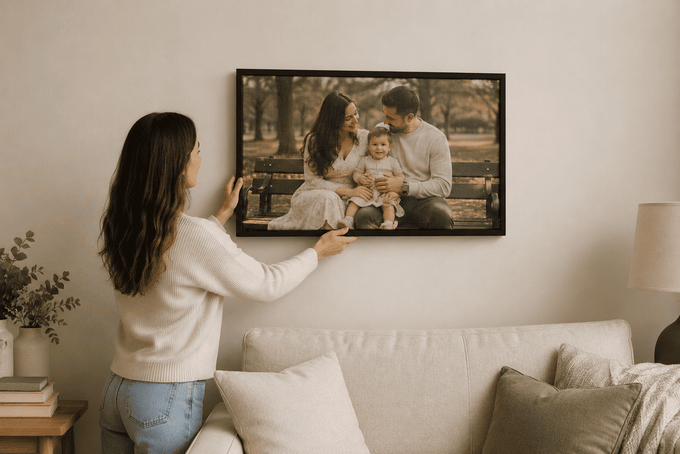
Imagine placing two prints of the same photo side by side on your wall. One sits inside a clean wooden frame. The other wraps edge-to-edge with nothing around it. Same image, completely different feel.
That's the framed versus wrapped canvas decision, and it trips up a lot of homeowners when decorating certain spaces in their homes. The choice affects how the room feels, how much the piece stands out, and how well it holds up over time.
Let's go over how to get it right for your walls.
Framed vs. Wrapped Canvas: What's the Difference?
| Framed Canvas | Wrapped (Unframed) Canvas |
|---|---|---|
Look | Structured, polished, defined. | Clean, modern, borderless. |
Depth | Added depth from the outer frame. | Natural depth from canvas thickness. |
Protection | The frame protects edges and corners. | Edges are exposed. |
Weight | Heavier. | Lighter and easier to hang. |
Cost | Higher due to framing materials. | More cost-effective. |
Best for | Traditional, transitional, formal spaces. | Minimalist, contemporary, modern spaces. |
What Is a Framed Canvas?
A framed canvas is a gallery-wrapped canvas, printed on artist-grade, finely woven canvas, that's then paired with an outer wooden border for added depth and presence.
Professional image enhancements are applied to every print to optimize sharpness, contrast, and color accuracy before it goes into the frame. The result is something that feels polished on any wall.
What to Know Before Choosing One
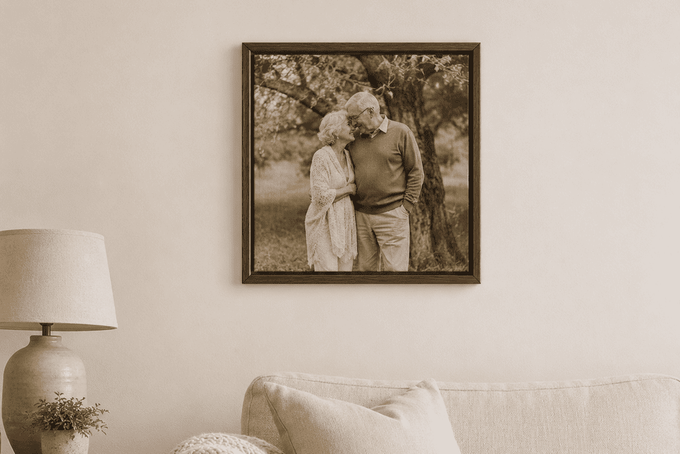
- The frame finish sets the tone for the whole piece. Warm wood tones like oak and walnut suit family portraits and wedding photos beautifully, while white and black frames work well in more minimal or contemporary rooms.
- For longevity, look for frames that are printed with special ink. Frames like those from FrameForest are printed using professional, pigment-based archival inks.
- The frame profile matters more than people think. A bulky frame can overpower a simple family portrait, while a clean, slim profile lets the photo do the talking.
- FrameForest framed canvases don't have glass over them, which means no glare from lamps or natural light. You get the polished, defined look of a frame without any of the reflective issues that standard glass frames can cause.
When It Works Best
- In traditional, transitional, or formal spaces like a dining room or entryway, especially walls that get a lot of natural light, since there's no glass to cause glare.
- When the room has warm wood tones or decorative details, a frame can complement them.
- When you want a smaller print to have more presence on a large wall.
- When the photo is a close-up family portrait or a wedding moment that deserves a polished finish.
What Is a Wrapped (Unframed) Canvas?
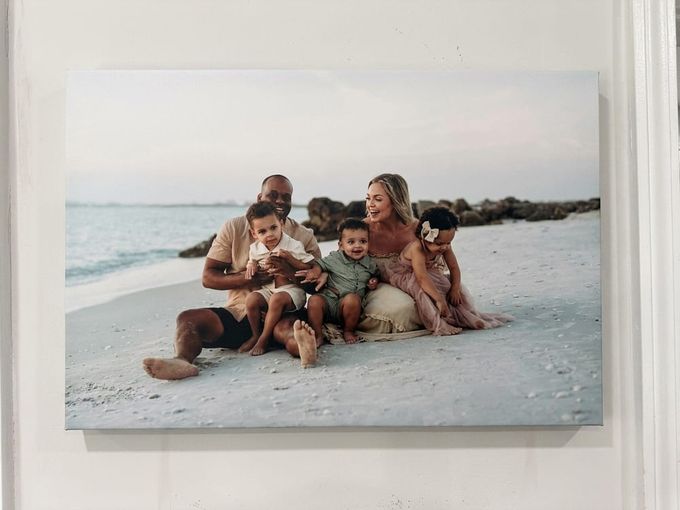
A wrapped canvas, also called a gallery wrap or unframed canvas, is printed on the same artist-grade, finely woven canvas as the framed option, then carefully stretched around a hidden internal wooden frame and secured at the back.
The image continues edge to edge with nothing around it, and professional image enhancements are applied to every print before it ships. What you see on the wall is just the photo, clean and uninterrupted.
What to Know Before Choosing One
- Keep your main subject centred in the photo since part of the image wraps around the sides. The wrap is intentional and finished, but you don't want anything important disappearing around the edge.
- If you'd prefer a cleaner look on the sides, FrameForest also offers a white or black edge option instead of the wrapped image. A white edge keeps things light and minimal, while a black edge adds a bold, graphic finish. Both are great alternatives if your photo has a lot going on near the edges.
- The quality of the canvas material makes a big difference at larger sizes. Look for artist-grade, finely woven canvas printed with archival inks so the colors stay vibrant and sharp over time. Wrapped canvases from FrameForest use pigment-based archival inks and professional image enhancements to make sure every print looks its best on the wall.
- Because there's no glass, there's no glare from lamps or natural light, which makes wrapped canvases a great choice for rooms with a lot of windows or walls viewed from a reclined position.
- Wrapped canvases are lighter than framed pieces, which makes them easier to hang, especially at larger sizes.
When It Works Best
- In minimalist, contemporary, or Scandinavian spaces with clean lines and uncluttered walls.
- When you want one large, bold statement piece that stands on its own.
- When you want a lighter, easier option for a large-format print.
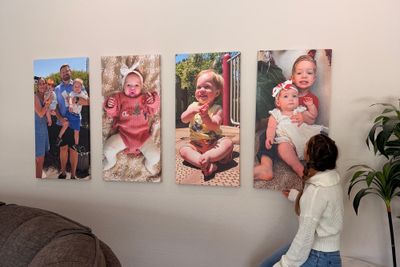
- When mixing frameless and framed pieces in a gallery wall, for added texture and depth.
Deciding on Framed vs. Wrapped Canvas for Your Room
Neither style is better than the other. It comes down to your room, your wall, and the photo you're printing.
- Framed canvases add structure and warmth and suit traditional or transitional spaces.
- Wrapped canvases are clean and modern and work best in contemporary spaces or as large statement pieces.
- Warm rooms with oak or walnut furniture suit framed canvases in matching wood finishes.
- Cool or neutral rooms with white walls suit wrapped canvases or frames in white or black finishes.
- Mixing both styles in the same gallery wall is always a valid and often beautiful option.
- Both framed and wrapped canvases from FrameForest are glass-free, so neither style will cause glare from lamps or natural light, making both a great choice for any room regardless of lighting conditions.
Make Your Room Walls Stand Out Without Effort
Whatever you choose, it starts with the right photo. Close-up portraits of your children, wedding moments, and candid family shots work beautifully in both formats because the emotion in the image carries the piece regardless of what's around it.
FrameForest offers both framed canvas prints and wrapped canvases in custom sizes so you can get exactly what your space needs. Every framed piece is printed on artist-grade, finely woven canvas using pigment-based archival inks, so whichever style you choose, the quality starts in the same place.
FAQs
Do you have to frame a canvas painting?
No, you don't. A gallery-wrapped canvas is already structurally complete and fully ready to hang on its own. A frame is purely an aesthetic choice you make based on the look you want and the room it's going into.
What's the difference between a wrapped canvas and a framed canvas?
A wrapped canvas has the image printed edge-to-edge with nothing around it. A framed canvas sits inside an outer wooden border that creates a defined boundary around the image. Same photo, completely different feel on the wall.
Which lasts longer, framed or wrapped?
Both hold up well over time. FrameForest frames are printed using professional, pigment-based archival inks, which prevent photos from fading, and the solid wood frame protects the canvas edges from bumps and scuffs. Wrapped canvases are durable too, but the exposed edges require slightly more careful handling.
Can I mix framed and wrapped canvases in the same gallery wall?
Absolutely. Mixing both styles in the same arrangement adds texture and depth and can make a gallery wall feel more collected and personal rather than staged or matching.
What size should I choose for a wrapped canvas?
It depends on your wall and what you're printing. For a single statement piece above a sofa or bed, larger sizes like 24" by 24" or 40" by 20" work beautifully. For a grouped arrangement with other pieces, something in the 8" by 10" and 12" by 9" range gives you more flexibility without overwhelming the wall.