ChatGPT
 Gemini
 Perplexity
 Claude
 Grok
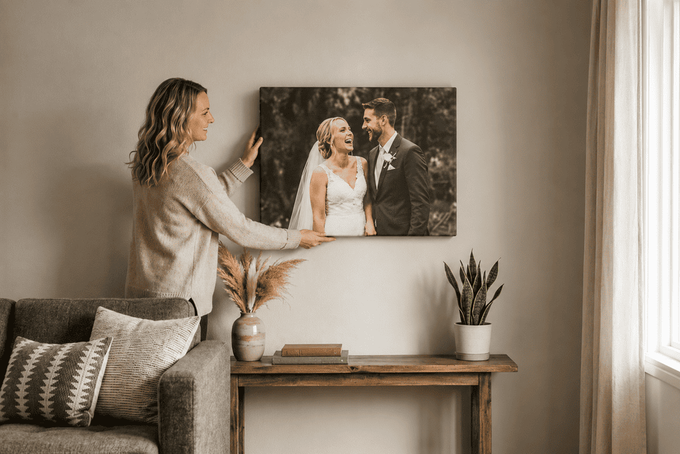
When you're choosing a canvas finish, it might seem like a small decision, but it's the difference between a portrait that feels timeless on your wall and one that glares back at you every time the afternoon sun hits it.
Uncoated, matte, and gloss finishes each behave differently under normal household lighting. They shift color depth, reflect light in different ways, and change how well a print reads from across the room. This guide breaks down what separates each finish and how to decide on the best choice for your photos and walls.
What's the Difference Between Uncoated, Matte, and Gloss?
Before comparing them, it helps to understand what each finish actually is.
Uncoated Canvas Finish
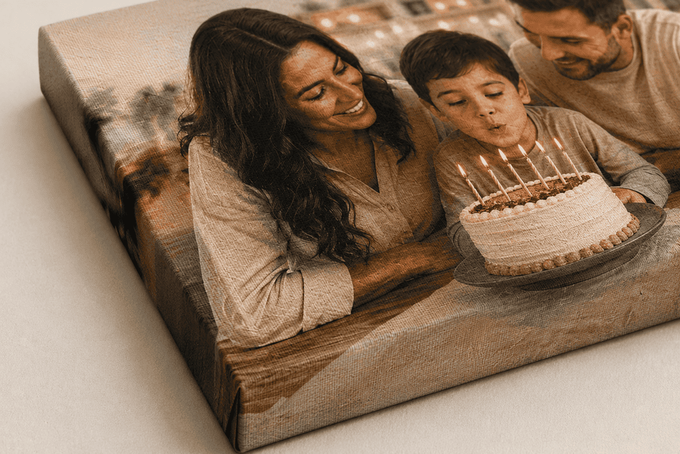
This finish has no additional surface coating applied, so ink absorbs directly into the canvas fibers rather than sitting on top of them. The result is a soft, tactile texture with a warm, natural feel, closer to how ink behaves on raw fabric than on a processed surface. It's best for vintage, organic feels.
Matte Canvas Finish
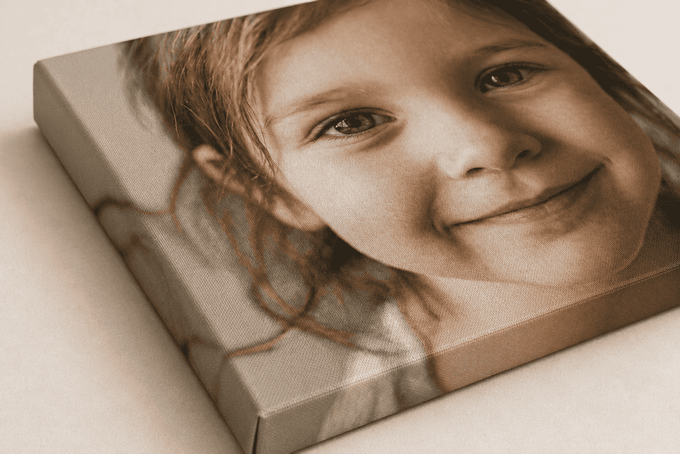
At first glance, matte and uncoated can look very similar in photos. The real difference shows up on the wall. Matte's coating gives it slightly more color depth and contrast, and it holds up better over time since the coating protects the ink from environmental wear.
This is a coated surface engineered to sit flat and non-reflective. That coating minimizes glare while preserving contrast and true color depth, which is why matte prints work best for portraits and family photos, as they hold their detail well even in bright, sunlit rooms.
Gloss Canvas Finish
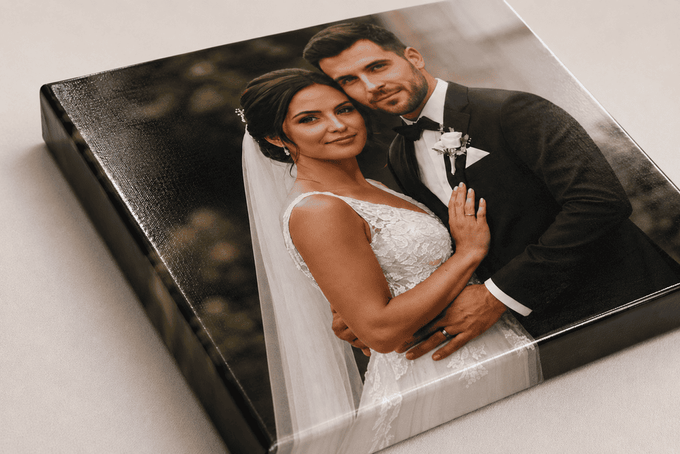
These canvases are also coated, but designed to be reflective rather than flat. They're best for bold, colorful art. That reflectivity boosts color vibrancy and saturation, making colors feel punchier and more dynamic.
The trade-off is visible glare under bright or direct light, and a surface that shows fingerprints and smudges more easily.
Matte vs. Gloss vs. Uncoated: How Do They Compare?
When you line the three finishes up side by side, four factors matter most.
| Uncoated | Matte | Gloss |
|---|---|---|---|
Glare | Very low | Very low | High |
Color vibrancy | Soft, warm | True to life | Punchy, saturated |
Fingerprint resistance | Good | Good | Poor |
Texture | Fabric-like, tactile | Smooth, flat | Smooth, shiny |
Glare
This is where the differences show up fastest. In a room with bright natural light, large windows, or overhead spotlights, gloss finishes throw back noticeable reflections. You'll often find yourself tilting the piece or repositioning furniture just to see it clearly.
Matte and uncoated finishes stay legible from nearly any angle in nearly any lighting condition.
Color
Color tends to look better on the gloss finish. The reflective coating makes colors feel more saturated and dynamic. Research found that glossy coatings increase perceived color saturation while reducing lightness compared with matte and uncoated surfaces [1].
Matte holds a more true-to-life color rendering that many people associate with a classic, gallery-quality look. Uncoated leans warmer and softer still, since the raw canvas fibers absorb some of the ink rather than holding it on the surface.
Durability
Gloss shows fingerprints and smudges more readily than matte or uncoated, which matters if a piece is hanging somewhere hands-on like a hallway, playroom, or kids' bedroom.
Texture is where uncoated stands apart. Its lack of coating gives it a fabric-like quality that neither matte nor gloss can fully replicate.
Which Canvas Finish Fits Your Space?
Each finish has a legitimate place on a wall. Here's when each one works best:
Uncoated canvas works well for:
- Boho or farmhouse-style rooms where a raw, organic texture fits naturally without feeling too polished.
- Black-and-white or vintage-style photography where the soft, muted look enhances the mood.
- Budget-conscious purchases since uncoated tends to be the most affordable of the three.
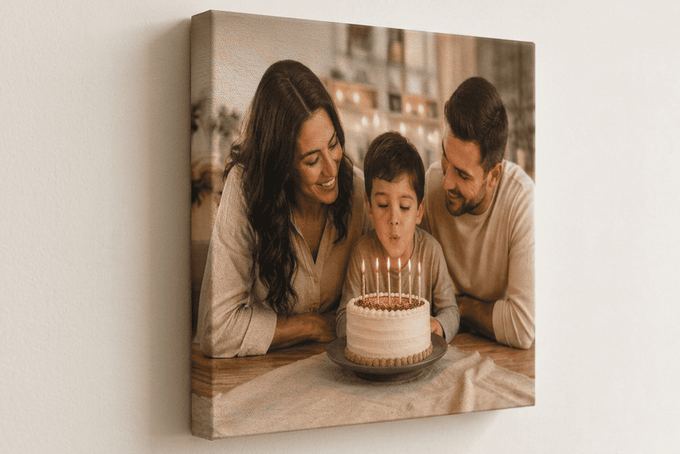
Matte finish works well for:
- Rooms with bright, direct light where a low-glare surface keeps the piece easy to view from any seat.
- Portrait and family photography where true color and fine detail like skin tones and expressions need to read clearly.
- Formal or wall gallery-style spaces where the flat, sophisticated finish supports a more polished presentation.
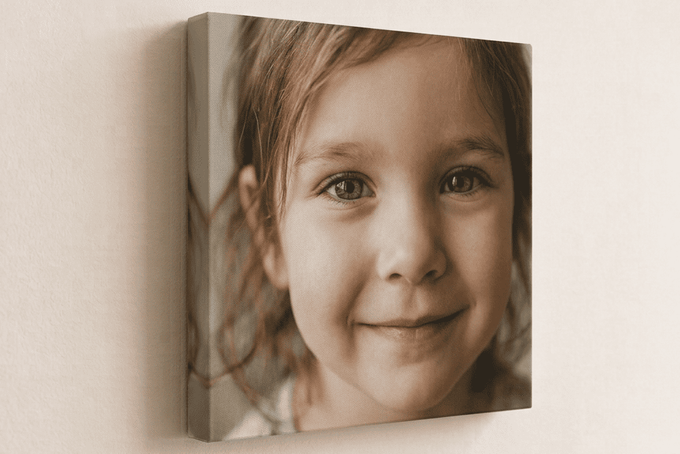
Gloss finish works well for:
- Dimly lit rooms or hallways where the reflective surface catches and bounces available light.
- Bold, colorful, abstract art where vibrancy and saturation are the whole point of the piece.
- Modern, high-contrast interiors that want a bit of shine and visual energy.
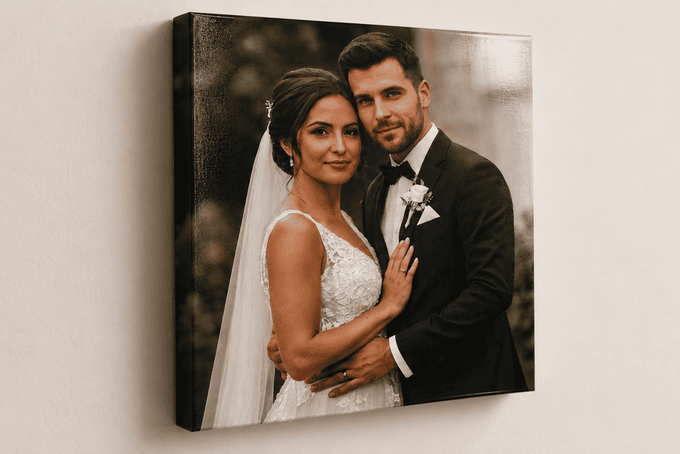
Which Is the Best Canvas Finish for Framed Family Portraits?
Matte is the most sought-after finish that wedding, family, and lifestyle photographers recommend for portraits, and the reason is simple: it lets the photo do the talking.
There's no glare competing with the image, no reflections shifting as you move around the room, and no artificial shine making an intimate moment feel staged. Skin tones, facial expressions, and fine detail all read clearly from any angle in any lighting, which is exactly what you want from a photo on a wall.
It's also the most practical choice for homes with kids. Matte resists fingerprints and smudges far better than gloss, so it stays clean for longer between dustings.
The Right Finish Makes All the Difference
Uncoated, matte, and gloss each create a genuinely different look and feel on a wall. There's no universally correct answer for every piece. But for glare-free, timeless framed portraits, matte consistently comes out ahead: true color, no distracting reflections, and a finish that lets the moment itself take centre stage rather than competing with the light in the room.
FrameForest's canvas prints are made on artist-grade, finely woven canvas using pigment-based archival inks, delivering a finish that behaves in all the ways that matter for portraits. Low glare, true-to-life color, and a natural feel that lets the photo speak for itself rather than competing with the light in the room.
FAQs
What's the difference between matte and gloss canvas finish?
Matte is flat and non-reflective, which keeps portraits looking clear from any angle in any lighting. Gloss is reflective and boosts color saturation but creates visible glare under bright or direct light.
Is uncoated the same as matte?
Not quite. Both avoid the high shine of gloss, but they're technically different. Matte has a coating engineered for a flat, low-glare look. Uncoated skips coating altogether, giving the canvas a softer, more fabric-like texture.
Which canvas finish is best for family portraits?
Matte. It keeps skin tones, facial expressions, and fine detail looking true to life without glare or reflections getting in the way. It also holds up better to fingerprints and smudges, which matters in homes with kids. For a more cost-friendly choice, you can go with the uncoated canvas option.
Does gloss canvas show fingerprints?
Yes, more than matte or uncoated. The reflective coating makes smudges and fingerprints more visible, which is worth considering if the piece is going somewhere hands-on, like a hallway or kids' bedroom.
Which finish is best for a room with lots of natural light?
Matte or uncoated. Both stay legible from nearly any angle regardless of how much natural light the room gets. Gloss finishes can create distracting reflections in bright, sunlit rooms that make the piece hard to view comfortably.
References
Granzier, J. J. M., Vergne, R., & Gegenfurtner, K. R. (2014). The effects of surface gloss and roughness on color constancy for real 3-D objects. Journal of Vision, 14(2), 16. jov.arvojournals.org