ChatGPT
 Gemini
 Perplexity
 Claude
 Grok
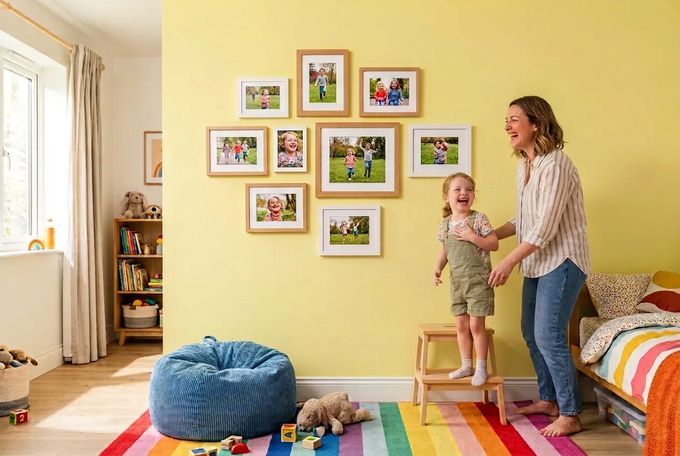
Kids' rooms collect things fast. Crayon drawings, hand-me-down posters, a shelf of half-finished projects. What many of them lack is a wall that says this room belongs to this particular child.
A fun wall doesn't need a theme or a pile of stickers. It needs a few things only this child would recognize: their laugh, their latest obsession, the places they've been.
These kids' room decor ideas show how to build a wall like that, covering different ages and room sizes. You'll also find safety basics and hanging tips suitable for active children.
What Makes Kids' Room Decor Ideas Feel Personal, Not Generic?
Nobody hands a child a beige crayon, so a beige room rarely feels right. That doesn't mean covering every wall in primary colors. Start with the room's job. A bedroom leans calmer, since sleep comes first, while a playroom can be louder and more exploratory.
Either way, the wall works best when it says something about the child who lives there. Decals and stock prints fill space fast, but they could hang in any kid's room. Photos of the people and places your child knows do a different job. Familiar faces make a space feel warm and clearly theirs.
Which Safety Basics Matter Before You Hang Anything in a Child's Room?
Active kids climb, tug, and lean. Plan the wall with that in mind before you pick a single photo.
- Choose acrylic over glass: Glass can break into sharp pieces if a frame falls or gets knocked. Acrylic is lighter and far less likely to do that, so it's the safer front for any frame within a child's reach.
- Use suitable hardware and anchors: Each FrameForest frame includes a mounting kit with premium sawtooth hangers, but your wall decides what holds it. Use anchors rated for the frame's weight, and hang larger frames from two points to keep them level.
- Skip cords and magnets: Choose cordless window coverings, since children can strangle on blind cords within moments [1]. Avoid magnetic hangers and decor in a child's reach too, because swallowed magnets can cause serious internal injuries [2].
- Mind beds and cribs: Leave clear space between the mattress and the lowest frame so a child sitting up can't bump it. Keep ledges and shelves away from cribs and any spot a child can climb.
8 Wall Decor Ideas for a Fun, Creative Child's Room
Start with the layout that suits your wall, then borrow styling ideas from the rest. Each option below pairs photos with a few extras, such as paint, texture, or shelving, so the frames feel like part of a whole room.
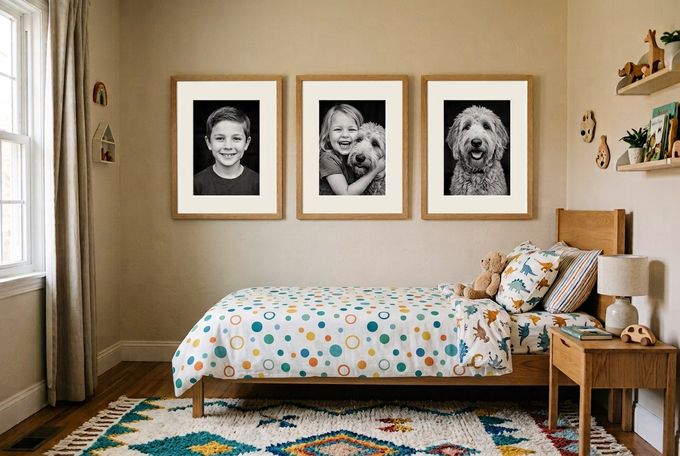
1. Hang an Oversized Portrait Trio Above the Bed
Gallery walls don't have to stay in the living room. Three large portrait frames in a row give a bed, dresser, or empty wall a confident focal point, and you can keep adding to it as the child grows. Sibling close-ups, pets, and expressive candids all suit the scale. This kids' bedroom decor idea works from nursery age through the teen years, and in shared rooms too.
Why It Works
Big frames keep a busy room from feeling scattered, and familiar faces make the wall feel reassuring. Black-and-white photos calm a room that already has color everywhere, from bedding to toys.
Photos and Frames That Fit
Sizes such as 17 by 25 or 20 by 30 inches suit an oversized trio. Mixing picture frame finishes keeps the set from feeling too formal, and using the same white mat on all three grounds the mix.
Styling and Hanging Tips
- Keep the room tactile: A wood bed frame, linen bedding in one calm color, a wool rug, and woven baskets for hiding the less attractive toys all support the quiet wall.
- Measure first: Three large frames span a lot of width, so measure the wall or headboard before you order.
- Leave headroom: Keep generous space above the mattress, and choose hardware suited to your wall type.
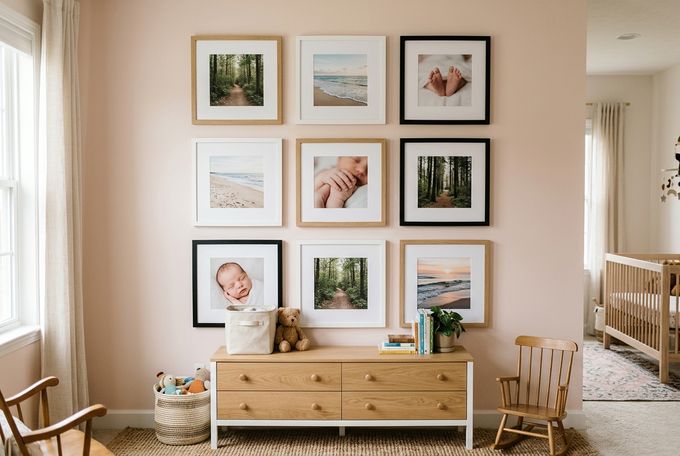
2. Tell the Family Story on a 9-Square Grid in the Nursery
Babies won't have opinions about their wall for a while, so a 3-by-3 grid can carry the family's favorite places and moments instead. Nine frames look intentional without feeling stiff, and each one holds a single chapter of the story. This bedroom gallery wall idea is made for infants and toddlers, and it grows with them as you swap in new photos.
Why It Works
A grid breaks a story into small pieces, which suits kids who love flipping through pictures. Each frame gives one moment its own space.
Photos and Frames That Fit
A favorite beach, a hike with the baby in a carrier, a pregnancy portrait, and newborn close-ups all earn a square. As your toddler starts drawing, photograph a few favorite artworks and keepsakes and print them for the grid too.
A single size such as 8 by 10 or 13 by 13 inches keeps things neat. Mixing oak, white, and black gives an edgier look, while one finish feels more traditional. Alternating no mat and standard mat adds interest.
Styling and Hanging Tips
- Keep it soft: Pale walls, a textured rug, and linen curtains on a cordless shade suit a nursery. A woven pendant light overhead adds warmth without competing with the grid.
- Lay it out first: Arrange the frames on a table or floor, then transfer the layout to the wall. Keep even spacing between frames all the way around.
- Check the height: We recommend centering framed photos 57 to 63 inches from the floor, or leaving 6 to 12 inches above furniture. Hang larger frames from two points.
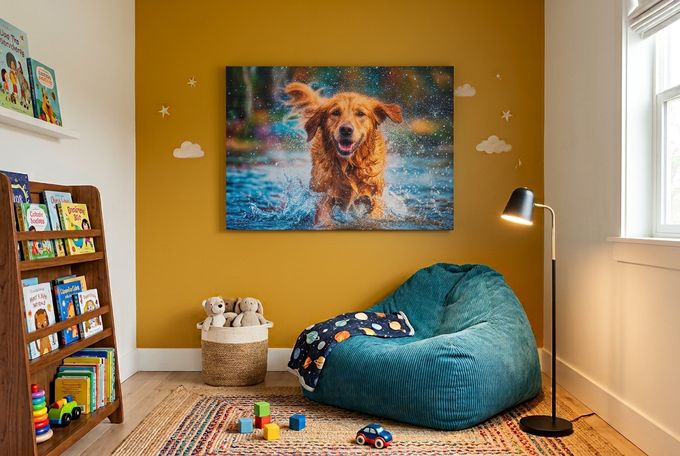
3. Print One Wrapped Canvas Big Enough to Own the Wall
Sometimes one big image says more than nine small ones. Hang a single wrapped canvas on the wall your child faces most, such as the wall at the foot of the bed, above a reading chair, or beside the window.
For extra meaning, use a photo your child took. Hand them a camera or a phone, help them frame a favorite shot if they need it, and print the best one large. The dog mid-shake or a crooked sunset will mean more to them than a photo someone else took.
Why It Works
Without an outer frame, a wrapped canvas offers a softer look that feels more casual than formal wood frames. Because you choose the picture size, one canvas can fill a big wall or fit a tiny nook.
Photos and Frames That Fit
Choose a photo with a clear subject near the center, since the image wraps around the edges. We recommend images above 300 DPI for the best quality.
If you're looking for a balance between a wrapped canvas and a more traditional photo frame, a framed canvas adds an outer frame in solid wood, black, or white.
Styling and Hanging Tips
- Pick a bold wall color: Paint the wall behind the canvas mustard or teal so the photo pops. Or keep the walls white and put the color in a rug and floor cushions.
- Add a spotlight: A small adjustable spotlight aimed at the canvas gives it a gallery feel, as long as the cord stays out of reach.
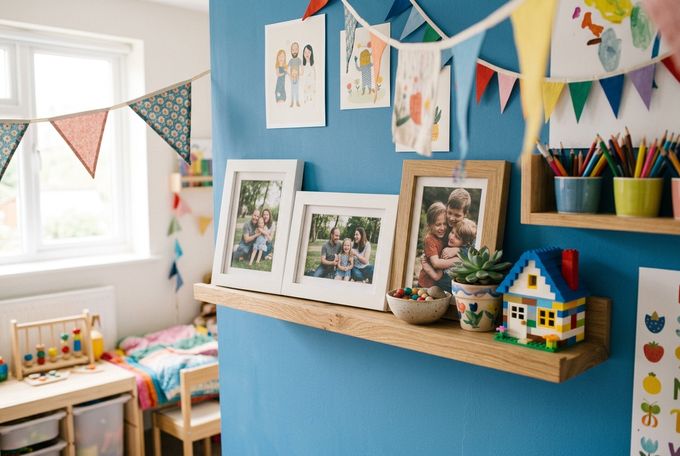
4. Let Kids of All Ages Restyle a Picture Ledge
A picture ledge lets a few framed photos share space with small treasures. Unlike a frame fixed to the wall, a ledge can change daily, weekly, or with the seasons.
Why It Works
Restyling gives older kids ownership of the wall, which builds creativity and pride. Younger children will enjoy co-designing the arrangement with their parents. Choose one ledge or three, since odd numbers tend to look settled.
Photos and Frames That Fit
Small candids work best, such as a beach day, a grandparent hug, or the family dog mid-leap. Prints from an instant camera suit a ledge too, especially if your child took them.
Look for a ledge with real depth and a front lip so pieces stay put. A natural wood ledge pairs easily with oak frames, and white frames work too. Frames in 8 by 10 or 10 by 12 inches lean well.
Styling and Hanging Tips
- Layer the ledge: Mix two or three framed photos with small ornaments, a bowl for tiny treasures, a ticket stub, or a plant. A brick model of a famous building gains meaning with a photo of the real one propped behind it. Put the tallest piece at one end and smaller items in front.
- Color the wall: A pale or deep wall color behind the ledge frames the display. If you hang it higher, lean an inexpensive vintage canvas on the floor below for a layered look and an early appreciation for art.
- Place it safely: Never mount a ledge above a crib or any spot a child can climb. Leaning frames can get knocked, so consider the optional acrylic overlay on picture frames.
5. Frame Photos of Whatever Makes Them Tick
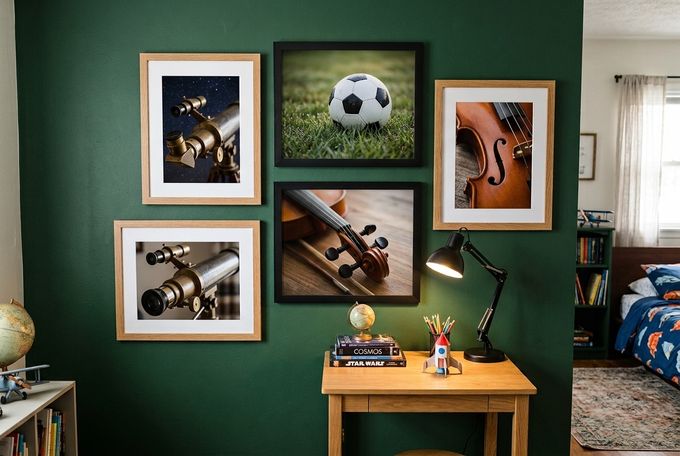
Skip the themed room using design clichés. A child obsessed with space, soccer, or the violin doesn't need a rocket-ship border or a matching comforter. A photo of them stargazing, mid-goal, or mid-solo says it better. Framing what makes them tick gives the wall a common thread, a real interest that runs through the whole room. This works at any age, from a toddler's truck phase to a teen's skateboard tricks.
Why It Works
A wall tied to a real interest feels earned, while a theme feels borrowed. It also tells kids their passions matter, even the ones that fade.
Photos and Frames That Fit
Choose close-ups of the child in action, such as adjusting a telescope, mid-kick, or hunched over a keyboard. A photo of your child at their favorite arcade game in a bold black frame says more than a store-bought poster.
Black picture frames with a standard mat give action shots a bold, graphic edge, and a few oak frames soften the cluster.
Styling and Hanging Tips
- Echo the interest: Use one or two real objects instead of a full theme, such as a telescope by the window or a shelf for soccer trophies. Keep the paint in one bold color, like deep navy, so the wall reads as a design choice rather than a costume.
- Leave room to grow: Start with three frames and keep space for another when the next passion arrives. Keep the gaps between frames consistent so the cluster looks planned.
6. Build a Reading Corner Around Bookshelves and Framed Covers
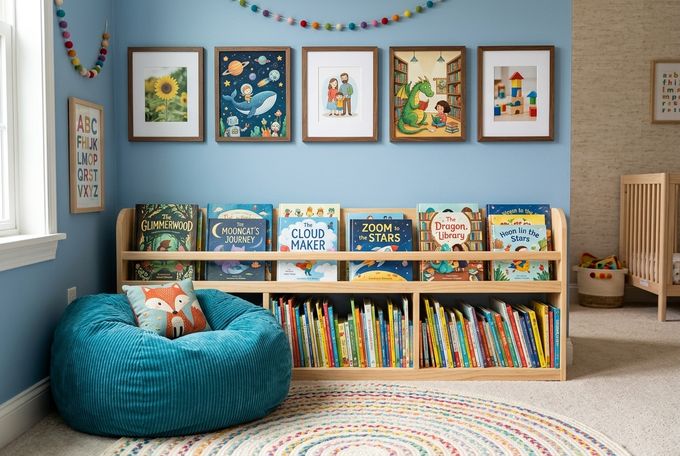
A reading corner turns a quiet routine into a ritual. Curl up on a comfy chair, beanbag, or floor cushion with books within reach, and story time starts to feel like an event. Even the smallest space works with two picture ledges and a few books. The idea suits every age, from picture books for toddlers to well-loved novels for teens.
Why It Works
Easy access builds the reading habit. Low, front-facing shelves keep favorites within reach, and a warm wood frame makes the corner feel like a small library.
Photos and Frames That Fit
Hang framed photos between framed prints of your child's favorite book covers. Photograph the cover, print it, and frame it. Place it beside a photo of a parent reading to a baby, a sleepy toddler with a favorite book, or siblings sharing a story.
Walnut or oak picture frames look polished without feeling stiff. If you're deciding which wood suits your frames, compare the grain and tone against the shelves nearby.
Styling and Hanging Tips
- Warm up the nook: Paint the nook a warm color and add a thick rug and a soft throw. A small reading lamp helps, with the cord kept out of reach.
- Stack the ledges: Stack two or three picture ledges vertically to display large picture books face out.
- Anchor everything: Secure every bookcase to the wall, and hang the frames with hardware suited to your wall type.
7. Frame Their Trips, Wins, and Proudest Moments
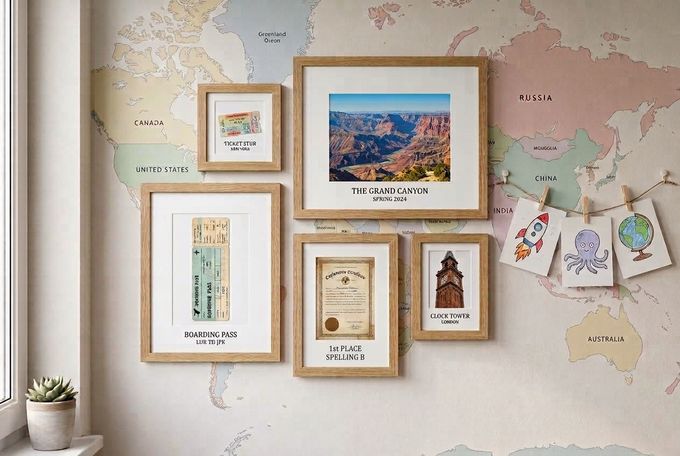
Some kids want every ticket stub saved. Turn those keepsakes into a wall that tells their story. Boarding passes, entry tickets, report cards, and certificates can be photographed or scanned, printed, and framed. A medal can be photographed on its ribbon the same way. This idea suits elementary school kids who are collecting their firsts, and it stretches comfortably into the tween years.
Why It Works
Framing an experience tells a child it counted. Mixing keepsakes with candid photos keeps the wall from feeling like a museum, so it stays lively.
Photos and Frames That Fit
FrameForest's caption frames let you print a two-line caption on the mat and choose the color of each line. Pair a place with a date, like "Grand Canyon" over "Spring 2024," or pair a result with the event, like "1st Place" over "Spelling B." They come in the same solid wood finishes as picture frames.
Styling and Hanging Tips
- Add a map: Hang a wall map behind the frames and place each one near the spot it came from. Add small pins or stickers for places they plan to visit.
- Clip up new art: A clothesline with pegs beside the frames holds current drawings, so the wall changes without a new nail.
- Keep it cohesive: Mix finishes if you like, but keep the mat color consistent so the wall feels collected rather than chaotic.
8. Give Each Sibling Their Own Collage Frame in a Shared Room
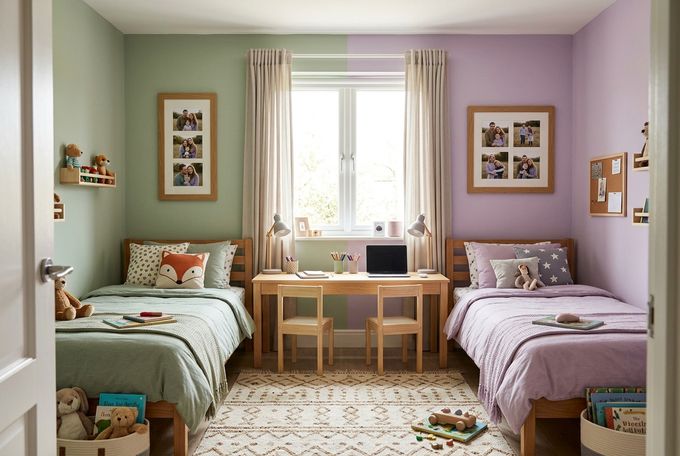
Two kids, two favorite color palettes, one room. Give each child a defined wall zone, such as the wall beside each bed, and let each fill it with their own photos. One collage frame per child holds two to four photos in a single piece, so each zone stays tidy even in a small room. This works for any age and any pair of siblings.
Why It Works
Separate zones let each child feel seen, and a shared frame finish stops the room from feeling like a tug of war.
Photos and Frames That Fit
A 15 by 27 inch three-photo portrait suits a narrow wall beside a bunk, while a 20 by 15 inch two-photo landscape fits above a bed. Use the same finish for both children and let the layouts differ.
Fill each frame with that child's own close-ups, favorite people, pets, and trips, so neither wall feels like an afterthought. Let each child choose their photos.
Styling and Hanging Tips
- Color-block the walls: Give each child a color, and tie the room together with a shared desk in a neutral wood.
- Share a ledge: A single picture ledge where each child takes turns choosing the featured piece each month keeps both kids invested.
- Balance the room: Define each zone before you hang anything. The same trick applies when blending different decor styles across a home, since one consistent element does the tying together.
How Can You Keep the Wall Fresh as Interests Change?
Kids' interests shift fast, and so does what they want to look at. A few habits keep the wall current without a full redo.
- Swap the photos: Quality frames can stay on the wall for years, so changing the prints costs far less than replacing the whole display.
- Repaint instead of reframing: A bright pink wall that suits a toddler can shift to a neutral greige as she grows up. The frames stay exactly where they are.
- Keep one accent wall: Let one bright wall hold the color and use more neutral shades on the others, so future updates need a single can of paint.
- Start small and stay consistent: Begin with three to five frames, use one family of finishes, and leave room to grow. A wall meant to expand never looks unfinished.
- Add new faces over time: Older kids love seeing classmates, teammates, and trips join the family photos, and a smaller cluster starts to resemble a grown-up gallery.
Which Design Basics Keep Any Kid's Room Fun and Functional?
A strong wall works best inside a room that's designed for the child who lives there.
- Leave space to breathe: Don't overfill the room. Open floor and wall space gives kids room to play, think, and imagine.
- Layer the lighting: Combine ambient light, task light for desks and reading, and feature light to highlight framed pieces. A gallery-style glow boosts a child's confidence in what they've made, as long as cords stay out of reach.
- Keep things reachable: Let kids reach their own shelves, books, and storage safely so their personality can show.
- Skip the matchy-matchy look: Mixing finishes, patterns, and textures keeps a room feeling collected and lived in.
- Let them help decide: Ask for your child's opinion at every step. You may not love every pick, but they will.
Make Every Wall a Place Where Creativity Lives
The best kids' wall isn't the most polished one. It's the one where a child spots their own people, interests, and creations at a glance. Choose the layout that suits your space, add a few colors and textures that feel like them, hang everything with safety in mind, and let your child help decide. They'll love the result more for having a say.
When you're ready to turn photos into finished pieces, FrameForest picture frames come in five solid wood finishes with optional mats and an optional acrylic overlay. A wrapped canvas suits a single big image, collage frames hold a whole sequence in one piece, and caption frames add a two-line caption to a milestone.
FAQs
What are the best kids' room decor ideas for a small bedroom?
The best design ideas for a small kid's room keep the wall simple. A single wrapped canvas or a compact collage frame avoids crowding, and picture frames in 8 by 10 or 10 by 12 inches fit tight spaces.
How high should you hang framed photos in a kid's room?
We recommend centering framed photos 57 to 63 inches from the floor, with 6 to 12 inches between a frame and the furniture below it. Above a bed, leave extra room so a child sitting up can't bump the frame. Treat these numbers as starting points, since walls vary.
Are framed photos safe in a kid's room?
They can be, with a few precautions. Picture frames offer an optional shatter-resistant acrylic overlay, and collage frames include one. Shatter-resistant does not mean unbreakable, so hang frames away from climbing spots, use hardware suited to your wall, and anchor nearby furniture.
Which photos work best for children's rooms?
Close-up, candid shots with real emotion, such as a sibling's laugh or a child mid-project, feel more personal than posed portraits. Photos your child took themselves add extra meaning. For the best print quality, we recommend images above 300 DPI, though we accept anything above 100 DPI.
How do you keep a shared room's wall from feeling competitive?
Give each child a defined wall zone with their own photos, then tie the zones together with one shared element, such as a desk. One collage frame per child, in the same finish, helps two different layouts read as a pair.
References